
Who run the world?
Girls.
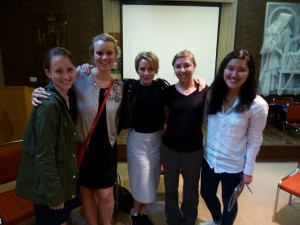
Care less. These were the simple words which Lisa Dillon, or the Roaring Girl, imparted with us after our Q&A session. Such simple words and yet such a strong message. While I think that this is an important and meaningful message to any college-aged group of students, it is especially impactful among a group of Washington and Lee students. Our school’s atmosphere and social culture tends towards caring very much what other people think. Your social status is determined by which Greek organization you are associated with (or not) and we are often reminded how important this is by which events we can attend or feel comfortable attending and the sterotypes which are associated with different organizations. Among sorority women especially, we police one another and remind each otehr how important it is to keep in mind what others think of us by what clothes we wear or who we hang out with or which people we date and which organization they belong to. Our social scene is filled with caring more, so the message of the Roaring Girl to care less can be extremely difficult to grasp but a worthy goal nonetheless.
We also delved in to the gendered aspects of Moll Cutpurse and what message the play might have been trying to send about gender and feminist thought as well as what it ought to have conveyed but maybe didn’t accomplish. While there was certainly some conflict between the message of girl power in the sense of embracing your femininity and being powerful through it versus embracing traditionally masculine traits in order to become more powerful, I think that these complicated messages are not only useful but essential to the play itself. While Moll may not embrace her femininity in the same way that Beyoncé does in the modern world, she is still a woman who is powerful through both feminine and masculine attributes. She is still, fundamentally, a woman. And yet she defines what that means to her rather than letting others tell her what being a woman entails.
Moll also embraces masculine qualities which some may argue was necessary for her independence as a woman in her time period, but which I would argue she takes on primarily because that is what she wants to do. Maybe she wants to do it in order to gain independence, or maybe she just enjoys wearing men’s clothing, or perhaps she takes pleasure in tricking people, but in any case I do not think that these actions solely pertain to adopting masculine attributes in order to become powerful in her society. She is powerful because she is herself, because she ‘cares less.’ Moll does anything that she wants no matter the social consequences. While this is a complicated message that perhaps not everyone will fully understand after walking away from the theater, I do not think it makes the play any less effective or useful by delivering it with all of its complexity and nuance.